As Viet Nam’s coal regions prepare for economic and social transformation, early action will be critical to ensuring that the energy transition creates new opportunities while protecting workers and local communities.
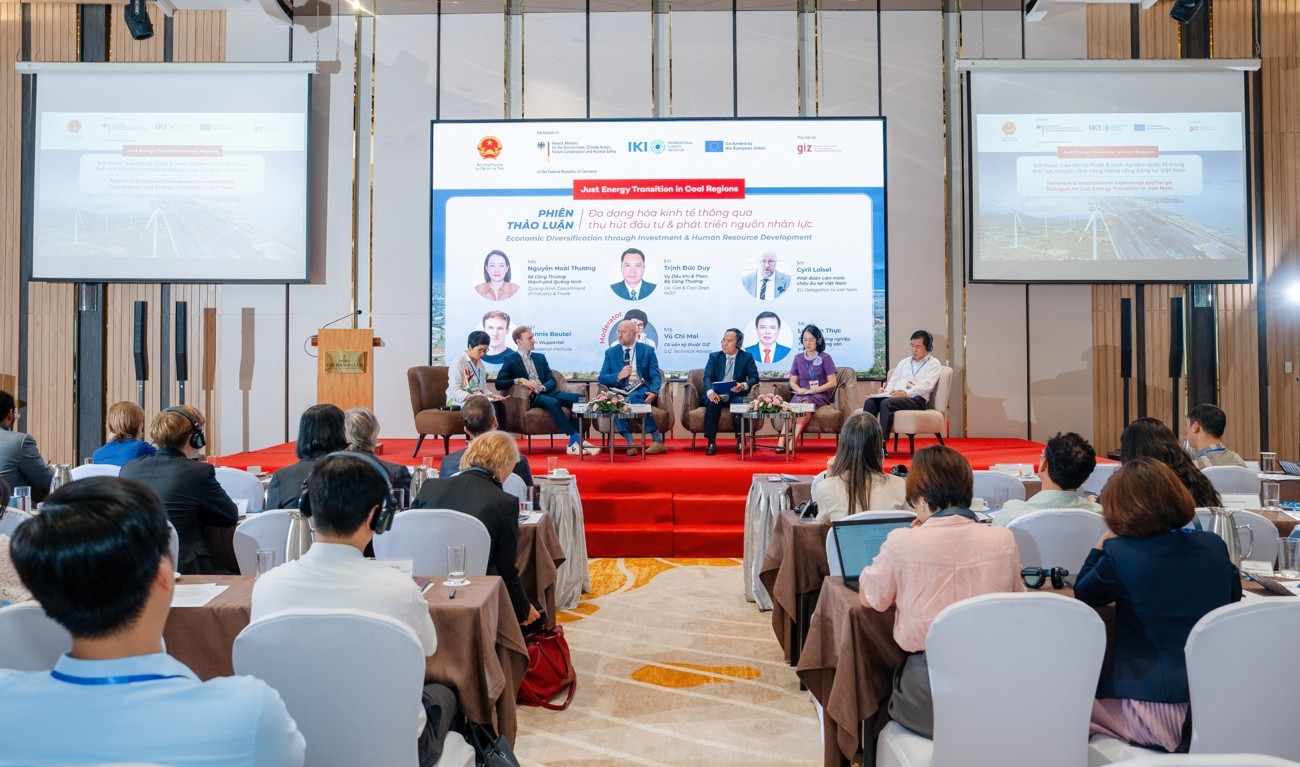
Government agencies, enterprises, development partners and international experts gathered in Hanoi to exchange experiences and identify practical approaches for Viet Nam’s Just Energy Transition, with a particular focus on the future of coal-dependent regions on 11 September 2026 in Hanoi
The Technical and International Experience Exchange Dialogue on Just Energy Transition in Viet Nam was co-hosted by the Oil, Gas and Coal Department, Ministry of Industry and Trade (MOIT) and GIZ Viet Nam under the Innovation Regions for a Just Energy Transition (IKI JET) project. Funded by the German Federal Ministry for the Environment, Climate Action, Nature Conservation and Nuclear Safety (BMUKN) through the International Climate Initiative (IKI), the project supports dialogue and practical approaches for a just transition in coal regions.
The dialogue focused on structural economic change, regional development, workforce transition and economic diversification. Participants shared international and local experience on spatial master planning, economic diversification, human resource development and mechanisms to strengthen regional competitiveness.
Preparing regions and people for change
A key message from the dialogue was that the energy transition needs to be addressed early, before mine closures take place. This requires coordinated planning, skills forecasting, economic diversification and mechanisms to mobilise investment.
Trinh Duc Duy, Deputy Director General of the Oil, Gas and Coal Department (OGCD) of MOIT, outlined three strategic priorities: integrated planning linking coal phase-down roadmaps with local socio-economic master plans; human resource preparedness through reskilling and skills forecasting; and green finance and investment to mobilise international and private capital.
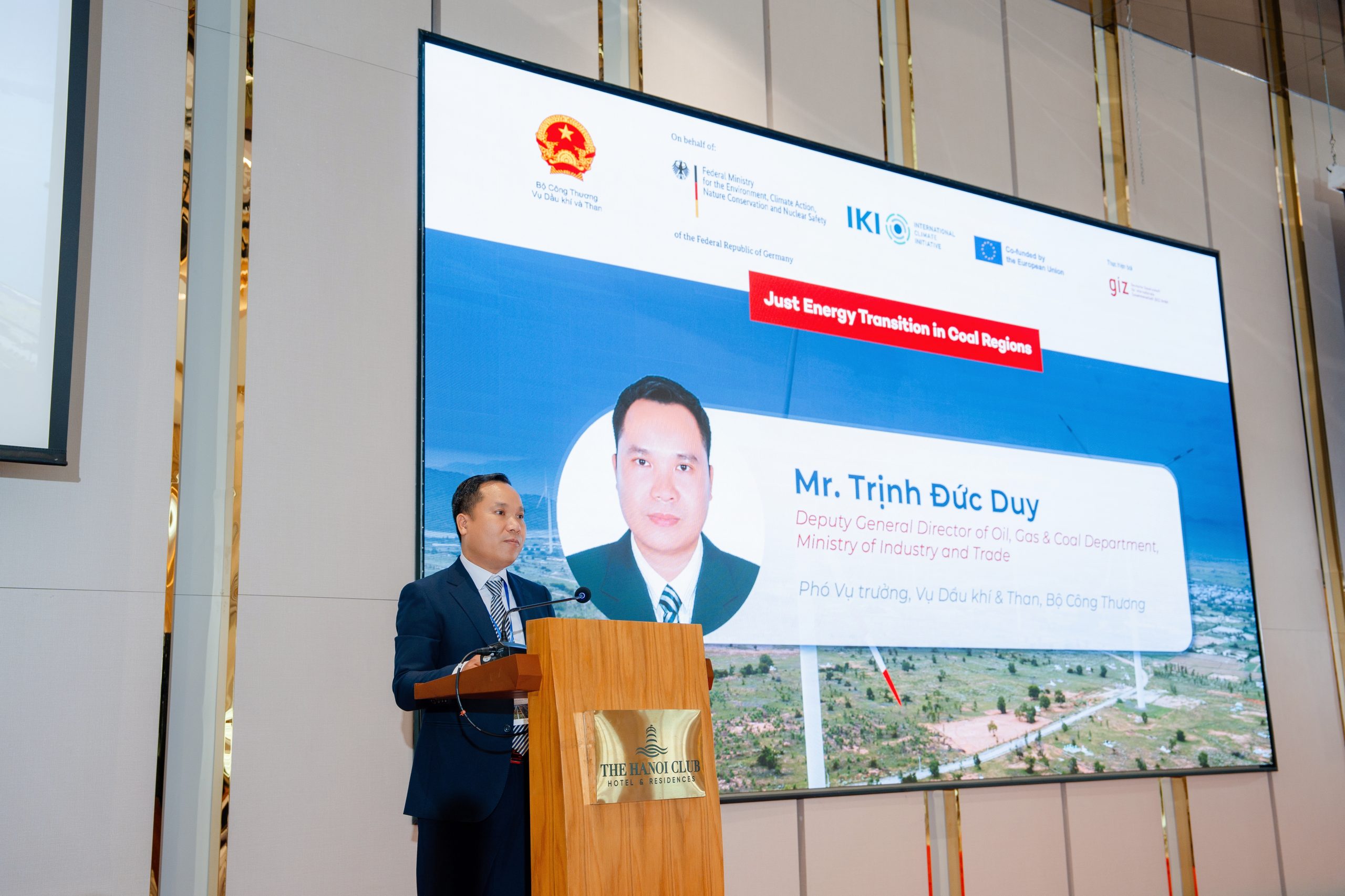
He also highlighted the need for inter-ministerial implementation frameworks that integrate ecological protection, clean production, greenhouse gas mitigation and worker safety into future coal operations.
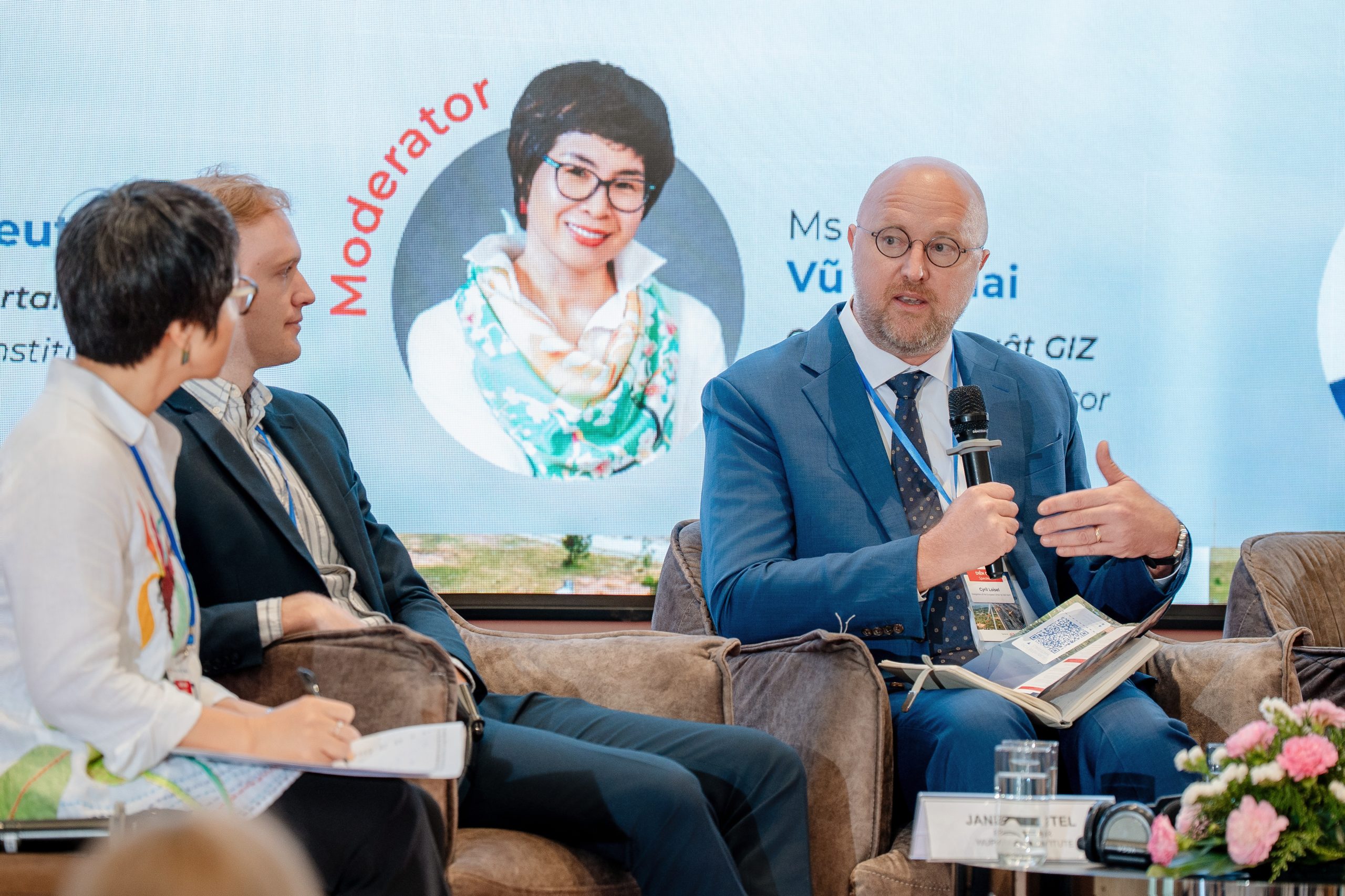
International experience presented at the dialogue underlined the importance of adapting transition approaches to local conditions. Cyril Loisel, First Secretary of the EU Delegation to Viet Nam, emphasised learning through implementation, digitalisation and consultation with local authorities, enterprises and communities. He noted that transition plans cannot follow a single model and need to take local working communities into account.
Quang Ninh’s experience in economic transformation
Quang Ninh provided an example of how a coal-producing province is preparing for economic transformation.
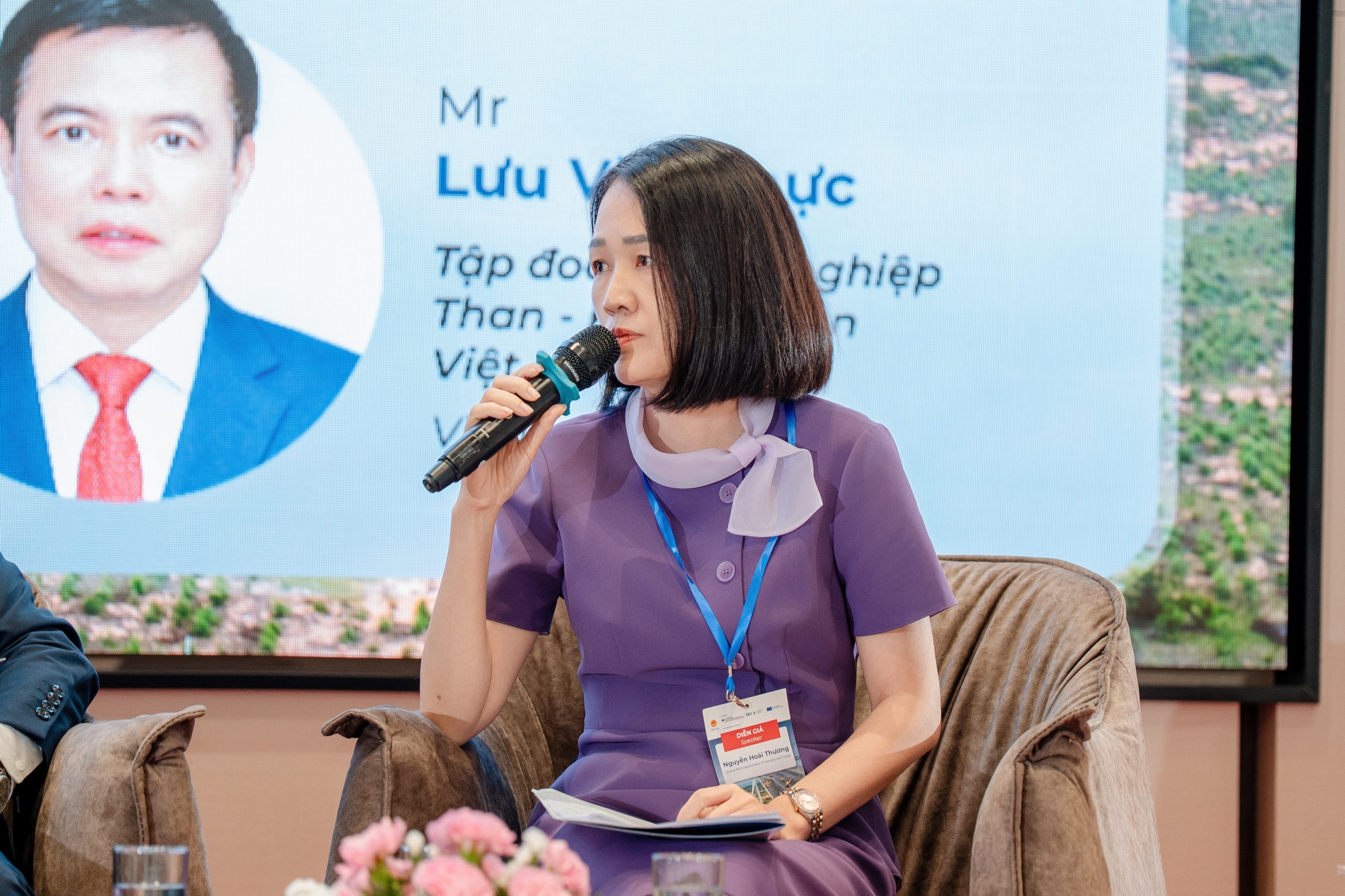
Nguyen Hoai Thuong, Deputy Director of the Quang Ninh Department of Industry and Trade, presented the province’s approach to shifting from “brown” to “green” growth. Its “3 Corridors – 4 Zones – 5 Hubs” spatial planning framework is being used to guide regional development, alongside an intended 50:50 balance between industry and services and welfare policies for miners. Thuong highlights that three development corridors, four socio-economic regions, and five growth-driving hubs enables each area to leverage its unique advantages while remaining connected within a unified whole. To be specific, she mentions Quang Yen Coastal Economic Zone can become a high-tech industrial hub, clean manufacturing, seaport infrastructure and multimodal logistics, Ha Long & Cam Pha Cities aim to be core urban centres, heritage tourism, service economy and urban regeneration across mining areas whileVan Don & Mong Cai Economic Zones are envisioned as hubs foraviation services, logistics, premium marine tourism and cross-border trade.
The dialogue highlighted the importance of using existing regional assets while preparing for new economic opportunities. Coal regions have existing infrastructure, capital, technical expertise and a highly specialised workforce that can form part of the foundation for future development.
For the workforce, early preparation is particularly important. Tran Cong Thai, Deputy Head of the Mining Technical Engineering Board at Vinacomin, stressed that the energy transition is a long-term process and that planning cannot wait until mines close.
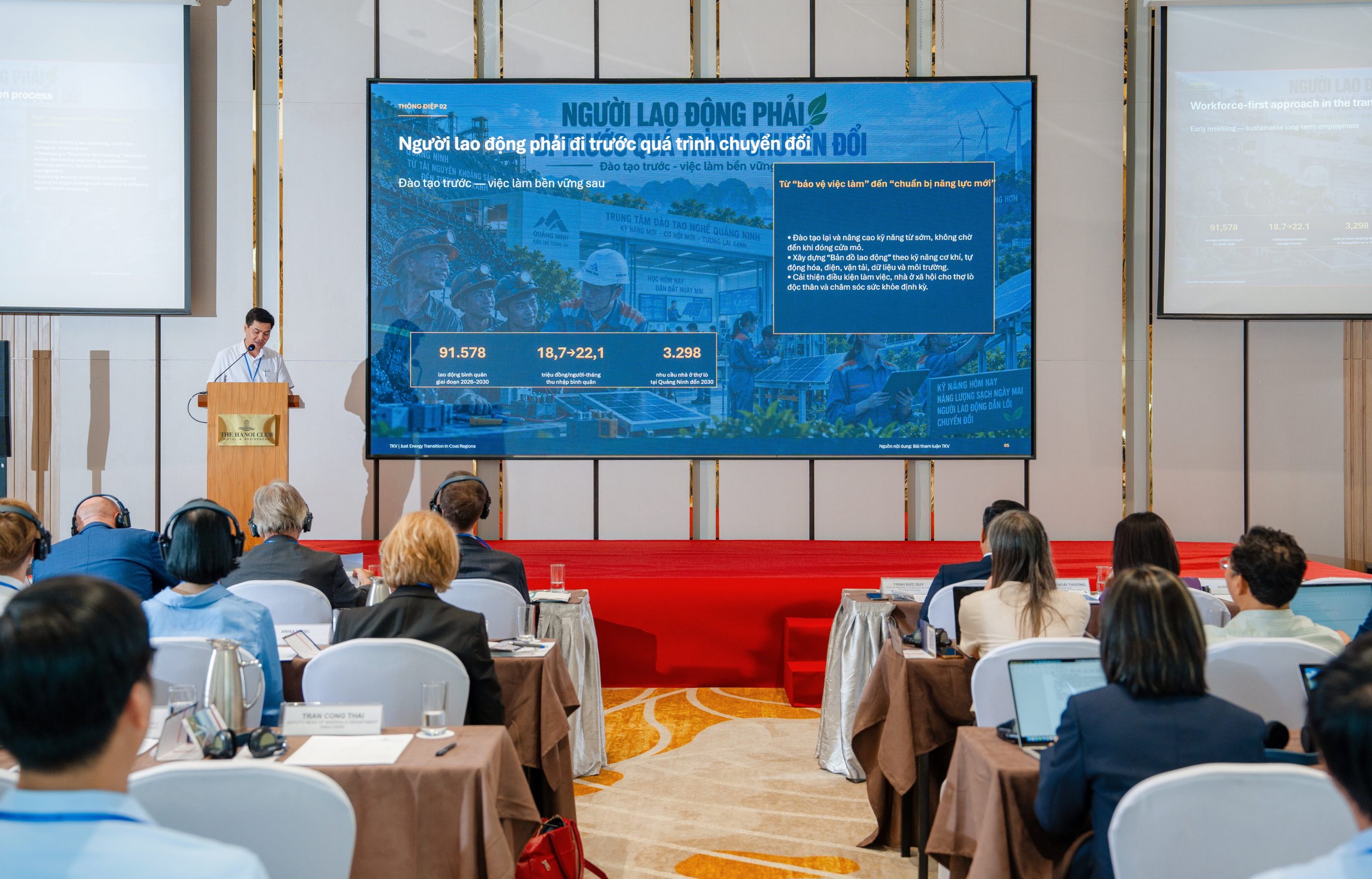
From planning to practical pilots
Participants identified several structural challenges facing Viet Nam’s coal regions, including highly specialised workforces, income gaps between mining and emerging sectors, financial liabilities associated with young coal assets and near-term requirements for grid stability. In practice, these challenges result in significant skill-transfer friction during career transitions, household financial strain, risks of prematurely stranded assets, and operational tensions between decarbonisation pace and baseload power security. To bridge the gap from planning to practical pilots, immediate next steps must focus on deploying early lighthouse projects—such as repurposing closed mine sites into renewable energy hubs or eco-industrial parks—anchored in integrated spatial plans like Quang Ninh’s “3 Corridors – 4 Zones – 5 Hubs” strategy. Coupled with forward-looking skill forecasting, strengthened inter-ministerial governance, and targeted green finance mechanisms, these actions will mobilise private capital while keeping workers, local communities, and grid reliability fully protected.
The dialogue highlighted the need to move from planning towards early-stage pilot projects. Potential approaches include repurposing closed mine sites for renewable energy or eco-industrial parks. These efforts can be supported by forward-looking skills forecasting, stronger inter-ministerial coordination and green finance mechanisms to mobilise private investment while protecting workers, local communities and livelihoods.
Reflecting on the discussions, Christiana Hageneder, Director of GIZ’s Energy Support Programme, highlighted the importance of combining early action with inclusive and coordinated planning: “Energy transition is a long-term journey that must begin immediately with concrete pilot projects. It requires strong multi-stakeholder and inter-ministerial coordination, while placing local communities, workers and retirees at the centre of social welfare policies. At the same time, regions such as Quang Ninh should maximise their skilled workforce and existing infrastructure, while ensuring gender equality and recognising the important role of women in the green energy transition.”
Five priorities for a just energy transition
Christiana’s reflections capture five priorities that emerged from the dialogue. The first is to act early, with concrete pilot and lighthouse projects providing practical starting points for regional transformation. The second is to strengthen governance by improving coordination among ministries and between national and provincial levels, ensuring that energy, economic, workforce and social policies develop in a coherent way.
The third priority is to protect people. As coal-dependent economies change, miners, their families and retirees need to remain at the centre of social welfare policies. The fourth is to leverage existing regional ass

ets, including Quang Ninh’s skilled workforce, coal-sector infrastructure, capital and technical expertise, as foundations for new economic opportunities rather than simply assets associated with the past.
Finally, the transition needs to be inclusive. Gender equality and broad stakeholder consultation need to be integrated into green development, with particular attention to the role of women in the transition to a greener economy.
For coal-dependent regions such as Quang Ninh, early planning and practical implementation will be essential to managing the economic and social changes associated with the transition. The Hanoi dialogue brought Vietnamese and international stakeholders together to exchange experience and identify practical approaches that can help translate long-term transition objectives into action.