IKI DOCUMENT LIBRARY
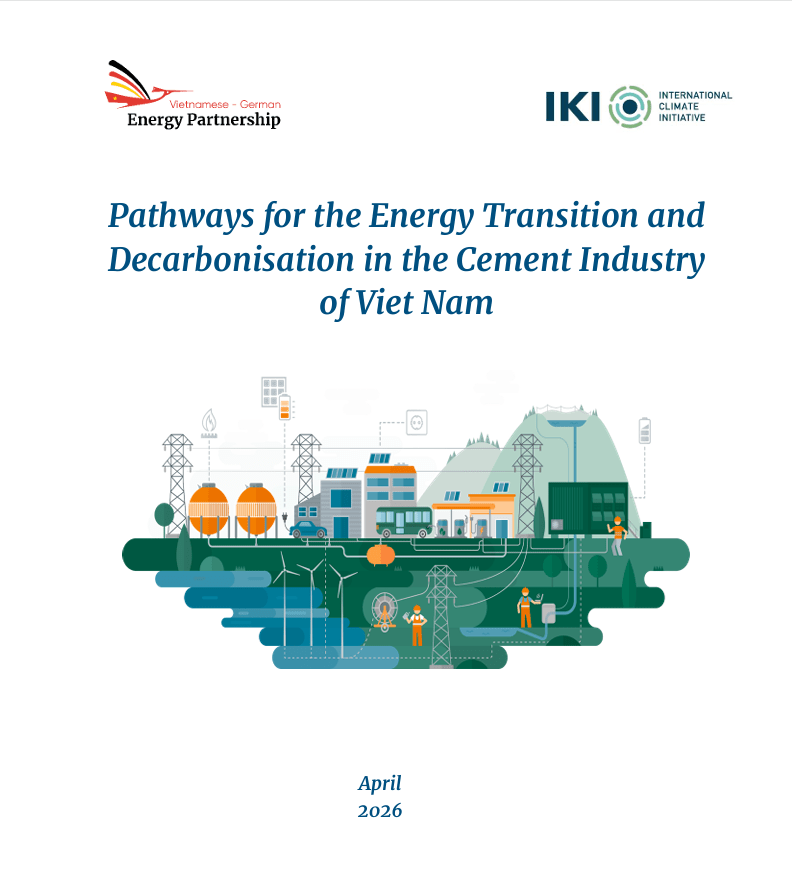
Pathways for the Energy Transition and Decarbonisation in the Cement Industry of Viet Nam
Viet Nam’s cement industry plays a critical role in national economic development but is also one of the largest industrial emitters of greenhouse gases (GHGs), due to the energy-intensive nature of clinker production and the process emissions released during limestone calcination. In recent years, the sector has faced increasing pressure to transition towards low-carbon production models, driven by Viet Nam’s commitment to achieving net-zero emissions by 2050, its obligations under the Paris Agreement, and
new global regulatory frameworks such as the EU Carbon Border Adjustment Mechanism
(CBAM).
This assignment contributes to these national efforts by providing a comprehensive analysis of technological options, policy conditions, and feasible transition pathways to reduce energy use and GHG emissions from cement production and cement-based building materials. The work also supports capacity building for enterprises in GHG accounting, technology assessment, and the planning of emission reduction actions.
Related Document
Related products
-
Urban Ecosystem-based Adaptation – Sustainable urban drainage systems
Deutsche Gesellschaft für Internationale Zusammenarbeit (GIZ) GmbH -
Báo cáo Đánh giá tổn thất và thiệt hại trong nông nghiệp tại tỉnh Quảng Bình và Hà Tĩnh, Việt Nam
Deutsche Gesellschaft für Internationale Zusammenarbeit (GIZ) GmbH -
Green walls and green roofs building resilient cities and adapting to climate change
Deutsche Gesellschaft für Internationale Zusammenarbeit (GIZ) GmbH -
Vietnam NDC Sectoral Report – Industrial Processes and Product Use
Deutsche Gesellschaft für Internationale Zusammenarbeit (GIZ) GmbH


