New policy allocates GHG emission quotas to 110 facilities in power, cement, and steel, marking a major step toward Viet Nam’s domestic carbon market.
1. Context
Viet Nam has taken an important step in operationalising its domestic carbon market by establishing a pilot greenhouse gas (GHG) emission quota allocation mechanism for major industrial emitters.
This development takes place within the broader context of Viet Nam’s carbon market roadmap, approved by the Prime Minister in January 2025, which outlines a phased approach with a pilot phase from 2025 to 2028 and full operation expected from 2029. The roadmap assigns roles to key government agencies and financial institutions, and further elaborates the provisions of Decree No. 06/2022/ND-CP (as amended by Decree No. 119/2025/ND-CP), covering core elements such as carbon market commodities, participants, infrastructure, operations, and capacity building.
Building on this foundation, the Decision No. 263/QD-TTg, dated 9 February 2026 (Annex) approving the total pilot GHG emission quotas for 2025 – 2026, marks a “shift from policy design to on-the-ground implementation”. The decision sets the total emission quotas for three emission-intensive sectors (thermal power, iron and steel, and cement), covering 110 major emitting facilities together account for around 40% of national GHG emissions.
To implement these sectoral caps, the Ministry of Agriculture and Environment (MAE) subsequently issued Decision No. 699/QĐ-BNNMT on 27 February 2026. This decision specifies the allocation of emission quotas to 110 individual facilities and clarifies responsibilities related to the implementation of the pilot quota mechanism.
The decisions were issued within a well-established policy and regulatory framework for GHG mitigation in Viet Nam. The decisions cite the 2020 Law on Environmental Protection and Decree No. 06/2022/ND-CP (as amended) as the core legal framework governing GHG mitigation, GHG inventories, and the development of the allowance mechanism. The pilot quota allocation phase is designed to help enterprises build familiarity and technical capacity for monitoring, reporting and verification (MRV) before the system becomes fully operational.
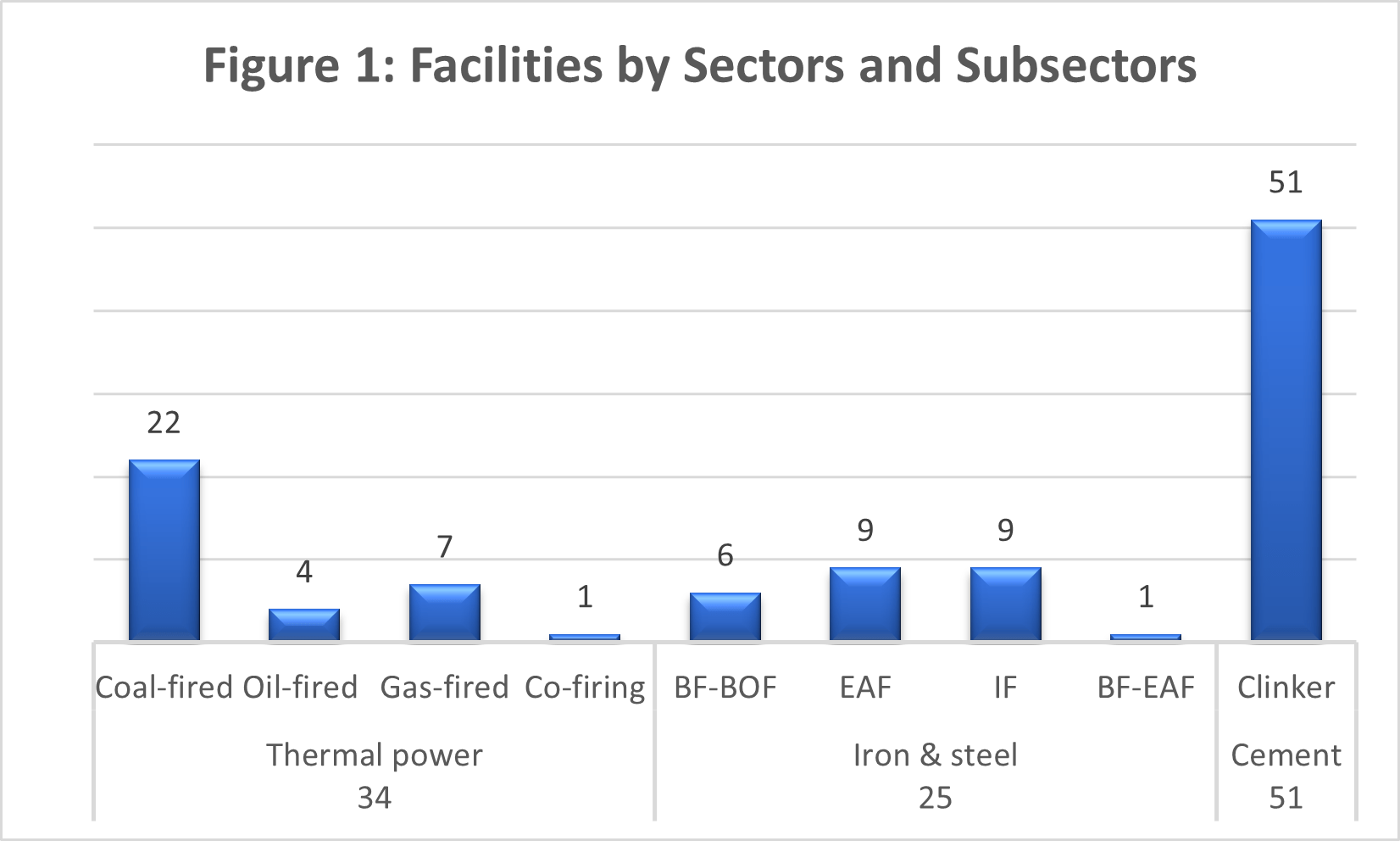
The 110 facilities covered by the pilot quota allocation are distributed across 28 of the country’s 34 provinces, reflecting the geographic concentration of Viet Nam’s heavy industries and power generation infrastructure. A higher number of facilities are located in key industrial and energy hubs, including Ho Chi Minh City (13), Quang Ninh (10), Ninh Binh (9), Hai Phong (8), and Thai Nguyen (8).
2. Facility-level allocation across three sectors
The total GHG emission quota allocated to facilities reaches roughly 243.1 million tCO₂e in 2025, increasing to 268.4 million tCO₂e in 2026. The aggregate quota volumes are as follows:
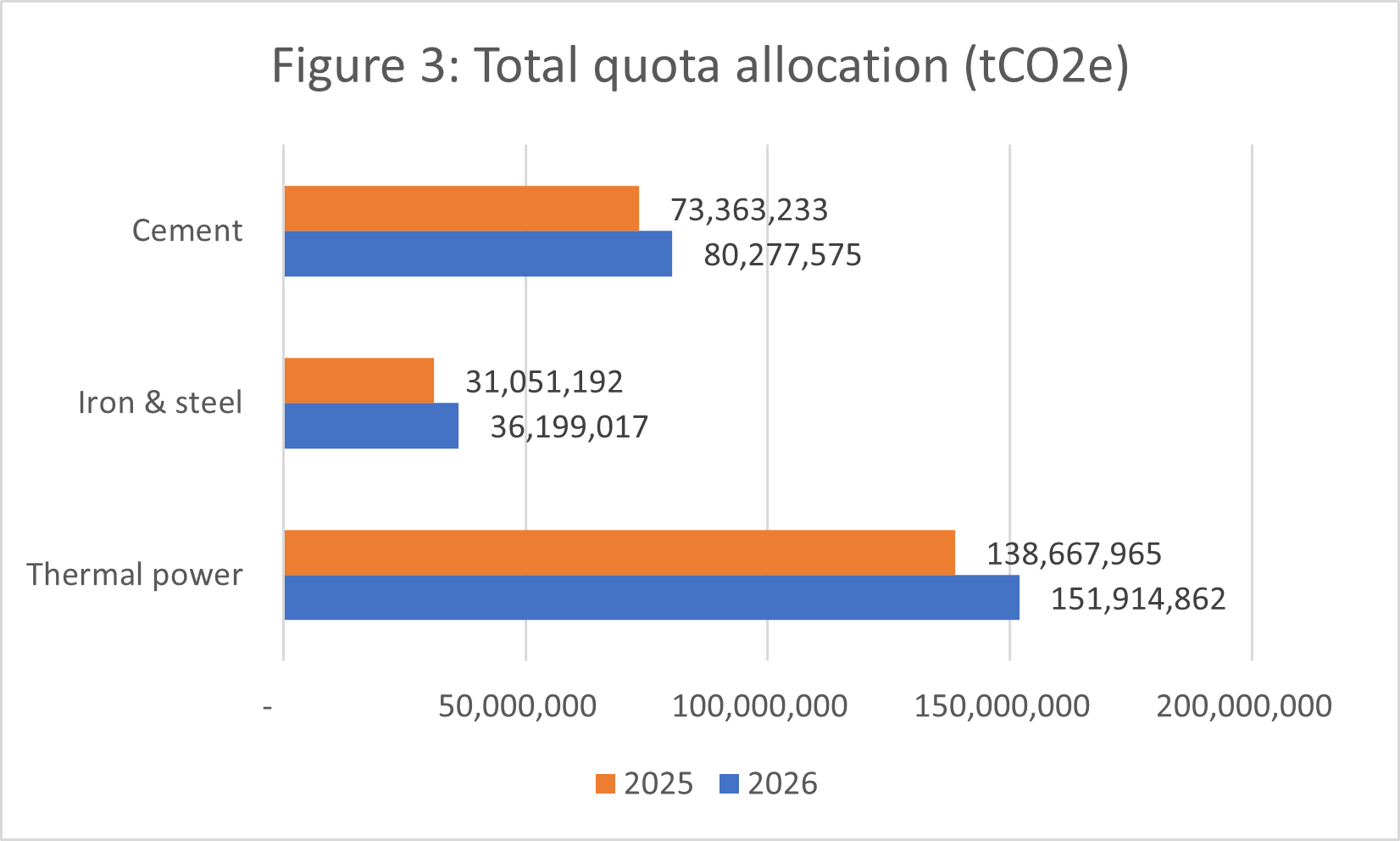
The thermal power sector receives the largest share, accounting for about 57% of quotas in both years, followed by cement (30%) and iron and steel (13%).
Cement sector:
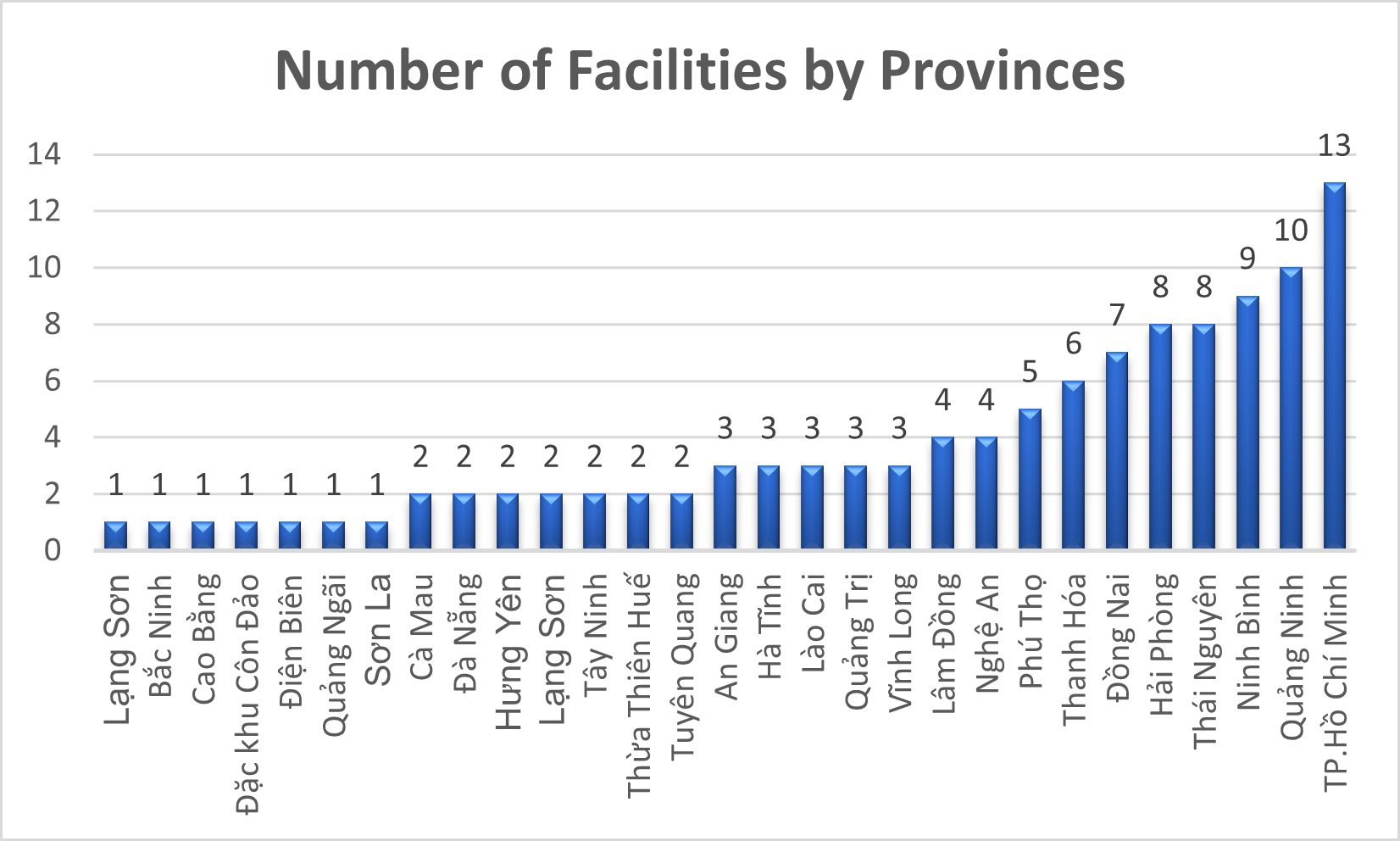
The pilot quota allocation covers 51 clinker production facilities, which represent the main source of emissions in the cement industry. The total emission quota allocated to this sector amounts to 73.4 million tCO₂e in 2025, increasing to 80.3 million tCO₂e in 2026.
Thermal power sector:
The pilot quota allocation covers 34 thermal power plants, including 22 coal-fired, 7 gas-fired, 4 oil-fired, and 1 co-firing facility. The total quota is set at 138.7 million tCO₂e in 2025 and increases to 151.9 million tCO₂e in 2026.
Iron and steel sector:
The pilot quota allocation covers 25 iron and steel facilities, representing different steel-making technologies: 6 BF–BOF plants, 9 electric arc furnace (EAF) facilities, 9 induction furnace (IF) facilities, and 1 BF–EAF facility. The total emission quota allocated to this sector amounts to 31 million tCO₂e in 2025, increasing to 36.2 million tCO₂e in 2026.
These totals are not merely administrative targets. They represent a balancing act between sustaining industrial output and accelerating decarbonisation by channeling the pilot cap toward the 3 sectors that dominate Viet Nam’s energy-intensive economy.
As per the Decision, the MAE will lead the implementation, in coordination with the Ministry of Industry and Trade and Ministry of Construction, to (i) pilot the facility-level allocation and issue implementation guidance, and (ii) conduct the pilot review and final evaluation, then propose legal refinements related to facility-level GHG inventory and allowance allocation.
To support the implementation of the quota allocation system and the future carbon market, the MAE also issued Circular No. 11/2026/TT-BNNMT dated 6 February 2026 on the management and operation of the National Registry System for GHG emission quotas and carbon credits. The circular establishes key rules for operating the registry system, including procedures for account management, registration and issuance of domestic identification codes for emission quotas and carbon credits, and the recording of transactions such as transfers, borrowing, and the use of carbon credits for offsetting emissions in accordance with national regulations.
3. Data-driven approach to quota allocation
The allowance allocation approach has been developed by pairing historical emissions data with sector growth assumptions and forward-looking macroeconomic projections. The calculation is built on:
- Emission intensity: direct emissions per unit of output
- Sectoral growth targets: expected production and demand trajectories over the allocation period
- Facility abatement potential: the realistic ability to reduce emissions in practice at facility level
In terms of data sources, Viet Nam did not yet have a legally mandatory facility-level GHG inventory requirement in 2022 – 2023. As a result, the Government relied on enterprise provided activity data as the primary input and then strengthened the dataset with verified inventory results from 2024. For the thermal power sector, actual operating data from the first 10 months of 2025 were additionally used to improve accuracy.
4. IKI Interface technical assistance to the Government of Viet Nam on setting the pilot GHG quota allocation
During the development of Viet Nam’s pilot GHG quota allocation, the critical factor was the quality and comparability of facility-level inventory data for the three priority sectors (thermal power, iron and steel, and cement) over the period of 2022-2024. Recognising that importance, GIZ provided targeted technical assistance to support the government build a credible data foundation for policy development. The work consolidated and sense-checked the enterprise-reported datasets, mapped emissions across key production steps to ensure the results were comparable.
Following the issuance of Decision 263, GIZ will continue to support the implementation by strengthening the facilities’ capacity on Emission Reduction Planning (ERP) and MRV systems, enabling regulated facilities to apply the Decision effectively, consistently and transparently.
ANNEX:
| THE PRIME MINISTER
No. 263/QD-TTg
|
SOCIALIST REPUBLIC OF VIET NAM
Independence – Freedom – Happiness Hanoi, 09 February, 2026 |
DECISION
Approving the total pilot greenhouse gas emission quotas for 2025 – 2026
THE PRIME MINISTER
Pursuant to the Law on Organisation of the Government dated 18 February, 2025;
Pursuant to the Law on Environmental Protection dated 17 November, 2020;
Pursuant to Decree No. 06/ND-CP dated 07 January, 2022 of the Government on greenhouse gas emission reduction and ozone layer protection, as amended and supplemented by Decree No. 119/2025/ND-CP dated 09 June, 2025 of the Government;
At the proposal of the Minister of Agriculture and Environment.
DECIDES
Article 1. To approve the total pilot greenhouse gas emission quotas for 2025 – 2026 for allocation to 34 thermal power plants, 25 iron and steel production facilities, and 51 cement production facilities as follows:
- The total pilot greenhouse gas emission quota for 2025 is 243,082,392 tons of CO2 equivalent.
- The total pilot greenhouse gas emission quota for 2026 is 268,391,454 tons of CO2 equivalent.
Article 2. To assign the Ministry of Agriculture and Environment to preside over and coordinate with the Ministry of Industry and Trade and the Ministry of Construction to pilot the allocation of greenhouse gas emission quotas for 2025 and 2026 to each thermal power plant, iron and steel production facility, and cement production facility and guide the implementation in accordance with regulations; organise the evaluation and review of the pilot process, and propose improvements to legal regulations on greenhouse gas inventory and greenhouse gas emission quota allocation.
Article 3. To assign the Ministry of Industry and Trade and the Ministry of Construction to monitor and evaluate the implementation of quotas by the facilities allocated with quotas within their scope of management.
Article 4. This Decision takes effect from the date of its signing and promulgation.
The Ministers of: Agriculture and Environment, Industry and Trade, Construction; Heads of ministerial-level agencies; Chairmen of the People’s Committees of provinces and centrally-run cities, and relevant organisations and individuals shall be responsible for implementing this Decision./.
Recipients:
- As stated in Article 4;
- The Prime Minister, Deputy Prime Ministers;
- Ministries, ministerial-level agencies, government-attached agencies;
- People’s Councils and People’s Committees of provinces and central cities;
- The Supreme People’s Court;
- The Supreme People’s Procuracy;
- The State Audit Office;
- Office of the Government: Minister-Chairman, Vice Chairmen, Assistants to the Prime Minister, General Director of the Government e-Portal, Departments;
- Archived: Clerical Office, Agriculture (2b)NXT.
FOR THE PRIME MINISTER
DEPUTY PRIME MINISTER
(Signed and stamped)
Tran Hong Ha