
The New Steps
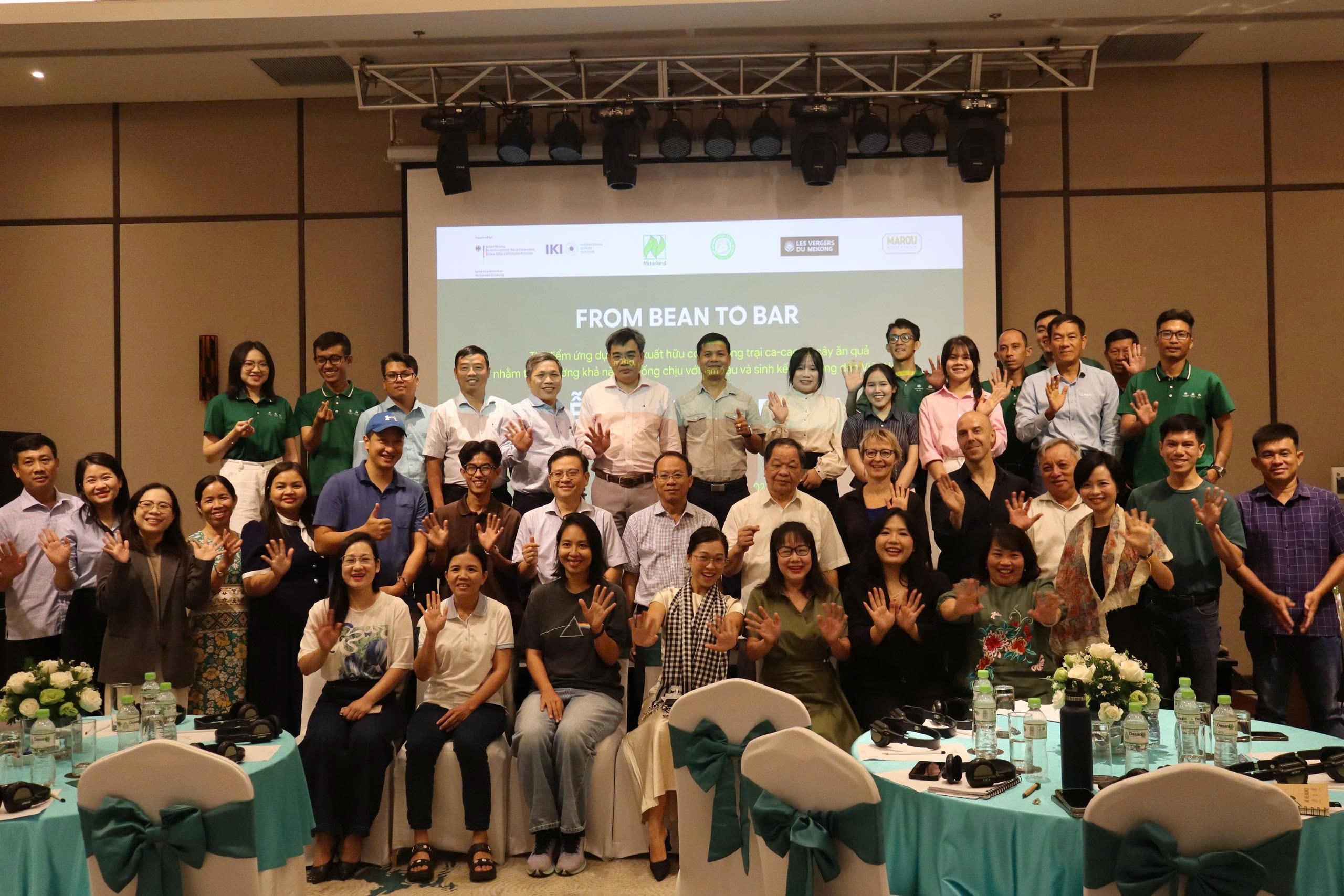
On 24 June 2026, the launch ceremony of the project “From bean to bar: Strengthening Vietnamese cacao and fruit farmers’ climate resilience and livelihoods through organic farming” was held in Can Tho, hosted by the Viet Nam Organic Agriculture Association (VOAA) in collaboration with Naturland. The project is funded by the Government of the Federal Republic of Germany through the International Climate Initiative (IKI) and approved by Viet Nam’s Ministry of Home Affairs for implementation until 31 December 2027.
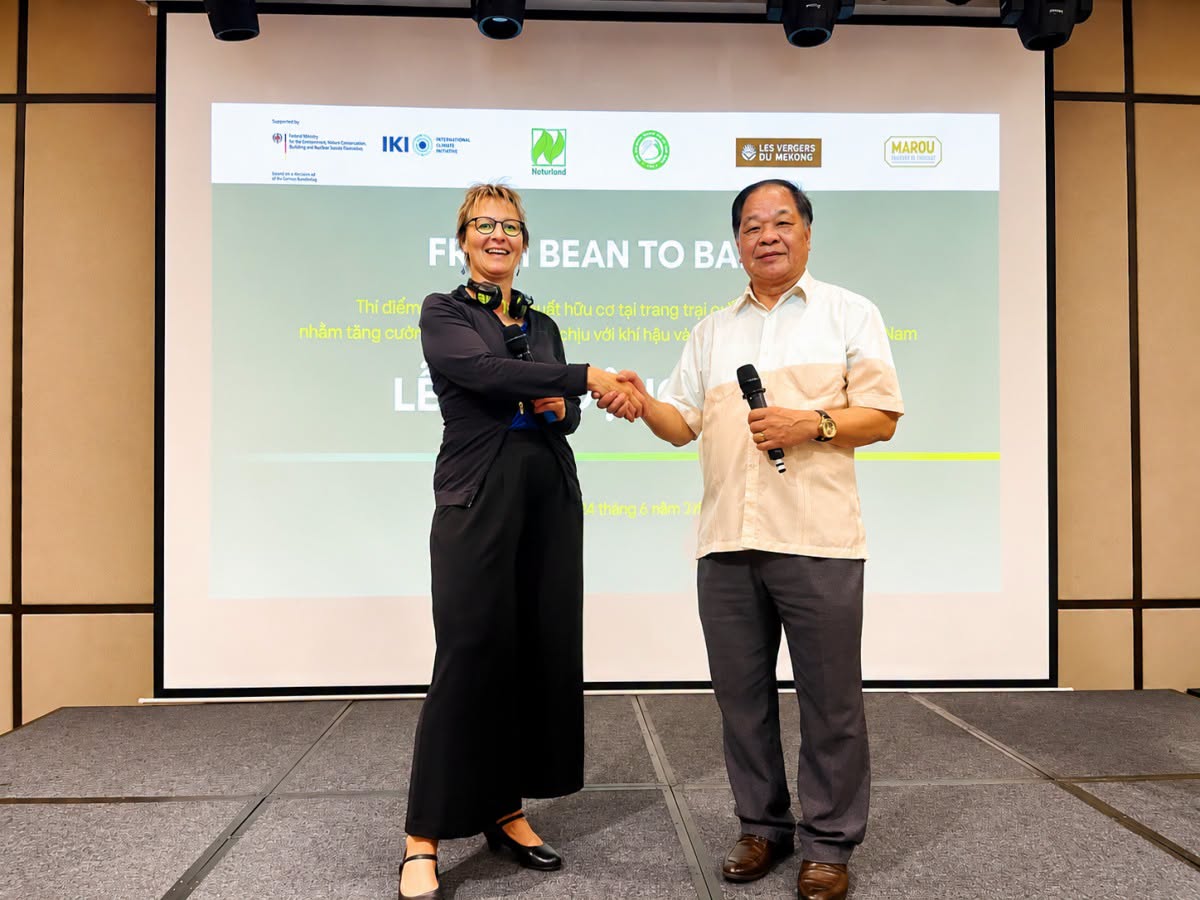
The project’s goal is to respond to climate change and improve farmers’ livelihoods through organic and sustainable farming. In addition to providing farmers with methods suited to local conditions, it develops farmer capacity and provides trainers and technical staff with knowledge and experience that can be shared and scaled. It also promotes cacao and fruit value chains that are more biodiversity-friendly and organic and brings farmers closer to enterprises, thereby enhancing product value and responsible consumption.
Sustainable Livelihoods For Farmers, Women And Ethnic Minorities
Viet Nam has many favourable conditions and contributes significantly to global agriculture, with the Central Highlands and Mekong Delta accounting for a large share, especially in cacao and tropical fruits. However, monoculture, traditional soil cultivation, and climate change pose significant challenges, threatening forest cover, biodiversity and soil health.
The migration of male labour to cities leaves mainly the elderly and women in rural areas, creating an imbalance and undermining sustainability in the agricultural labour market.
Therefore, the project’s launch is an initiative to establish suitable organic production models that increase income and improve livelihoods for vulnerable groups such as women and ethnic minorities, while attracting young, skilled labour to contribute to a sustainable agricultural economy.
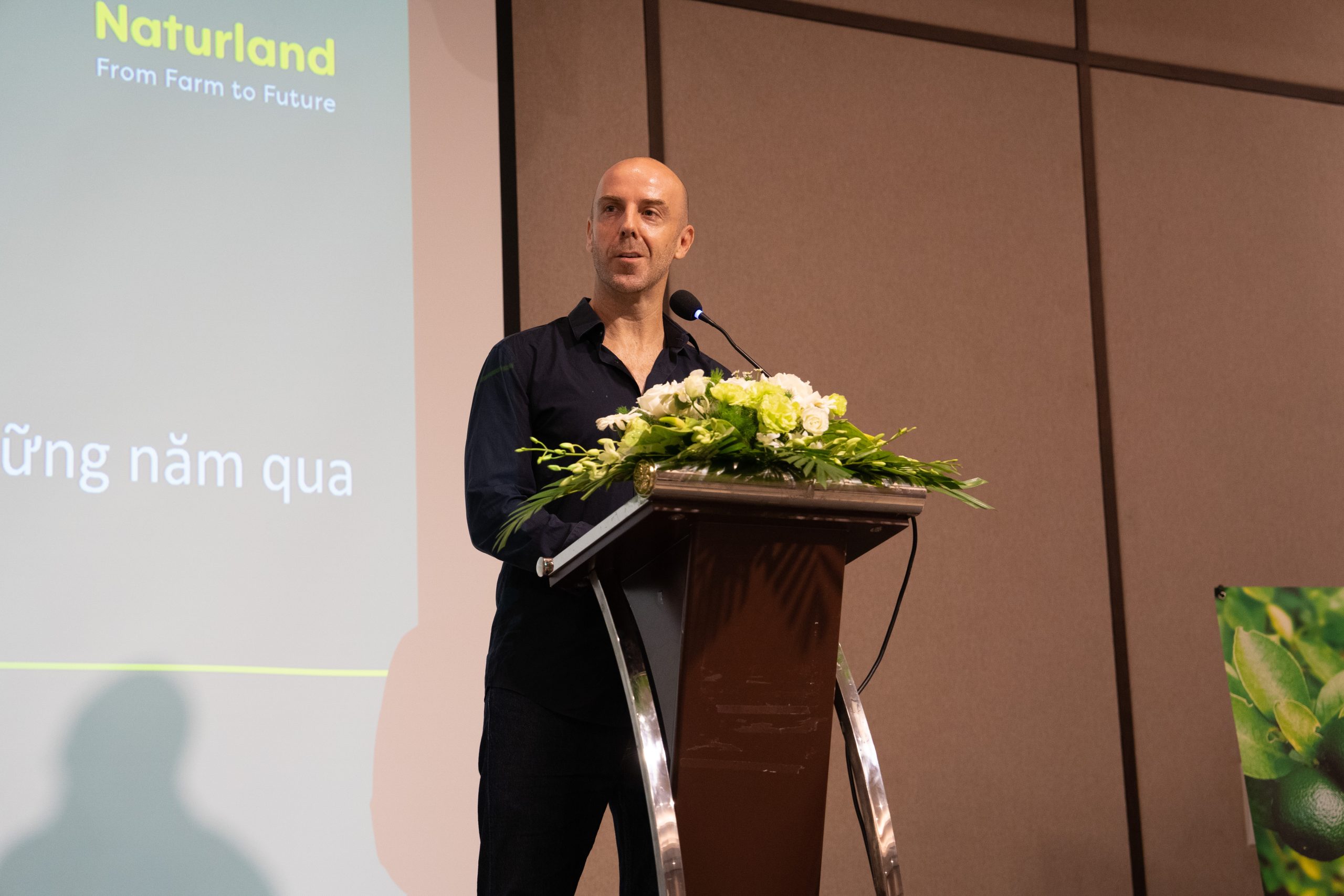
Explaining the choice of cacao and fruit trees, Mr. Albin Deforges, Director of Naturland Viet Nam, noted the project was designed with climate change mitigation in mind. The choice was not based on current acreage but on their potential to reduce greenhouse gas emissions. For cacao, agroforestry has the potential to restore forest ecosystems, increase forest cover and enhance biodiversity. For fruit trees, intercropped organic farming can reduce net emissions and strengthen climate resilience.
Field Survey
From 24-27 August 2026, the project team surveyed potential farms in Phuong Binh commune (Can Tho) and Bong Son commune (Gia Lai). The survey was conducted immediately after the launch to assess conditions, potential and farmers’ needs, selecting suitable farms for pilot organic practices.
This information helps the project design training activities, develop materials and provide technical support tailored to each household in the next phase.
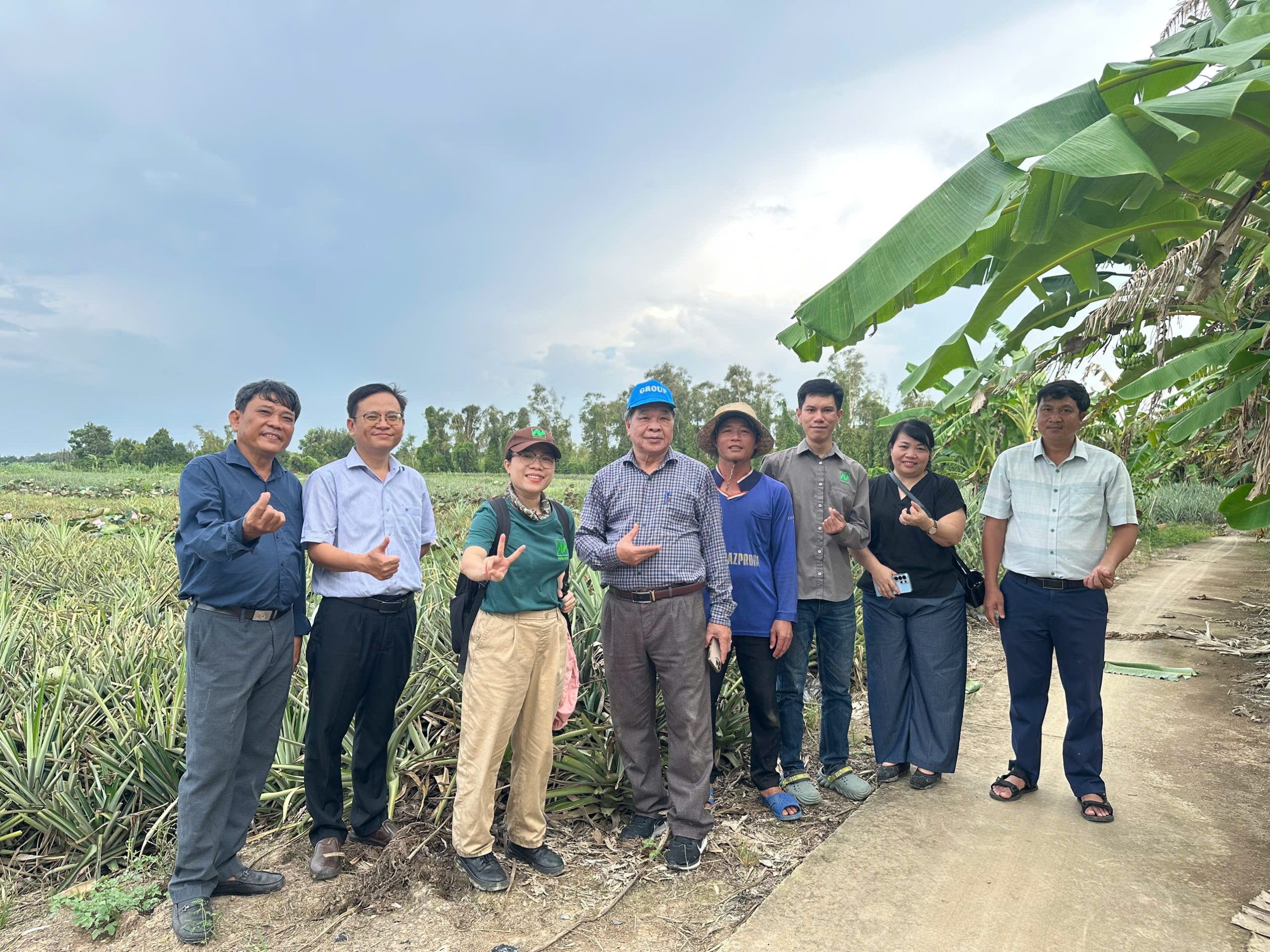
In Can Tho, the team interviewed five pineapple-growing households and added three neighboring households. A key issue identified was irrigation management under climate change. With farms located close together, the project aims to form a cooperative group and apply the Participatory Guarantee System (PGS) to support organic farming practices.
In Gia Lai, with local government support, the team interviewed one cacao farmer and one pomelo farmer. The main challenge is water scarcity during the dry season. Another pomelo farmer expressed interest in intercropping cacao, opening opportunities for diverse farming systems aligned with the project’s resilience and livelihood diversification goals. Like in Can Tho, PGS is also planned for Bồng Sơn to support collective management and organic practices.
Expectations Of Farmers And Local Authorities
The project has received strong support from local authorities, businesses, and farmers. Mr. Mai Nam, Deputy Director of Can Tho’s Agricultural Extension Center, noted that the city has over 100,000 hectares of fruit trees producing 1.23 million tons annually, with a strategy to create a green, ecological and organic agriculture by 2030. Mr. Huynh Viet Hung, Director of Gia Lai’s Agricultural Extension Center, said the province has over 800,000 hectares of farmland suitable for long-term industrial crops which is, however, heavily affected by climate change. Gia Lai currently has about 100 hectares of cacao, with plans to expand to 300-500 hectares. Farmer representative Mrs. Nguyen Thi Den shared that transitioning to organic farming has improved the environment and the health of farmers.
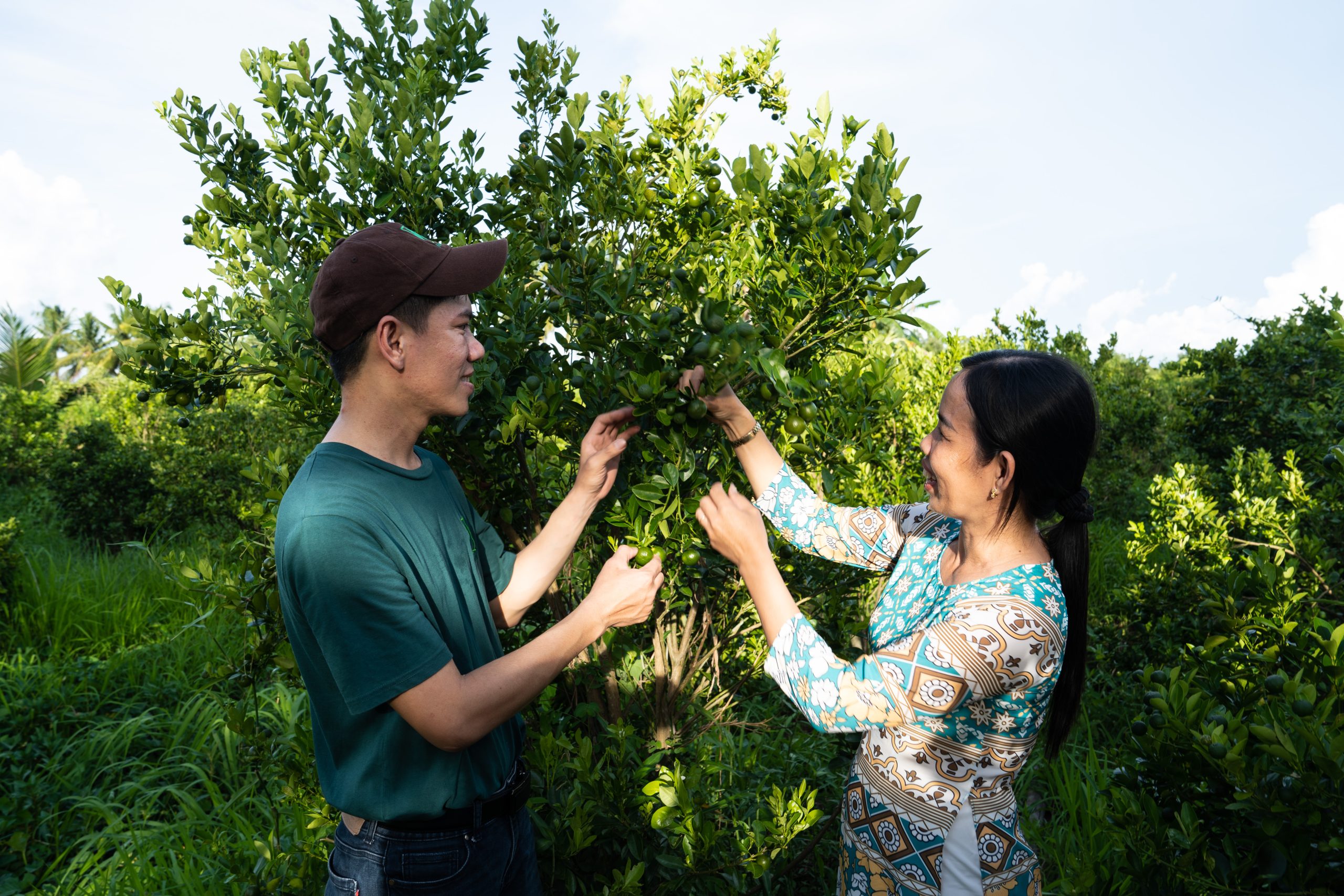
Ms. Nguyen Thi Den, owner of a 6.3-hectare calamondin orchard in Tân Hòa commune, Can Tho, explained that her family began transitioning to organic farming two years ago. They have established buffer zones, reduced chemical fertiliser use and applied biological agents for pest management. With project and business support, they are preparing for organic certification. She said: “What I value most is not only producing export-quality products but also caring for farmers’ and workers’ health.” She hopes to receive more training in composting and biological pesticide production to fully transition to organic inputs.
From the business perspective, Mr. Le Van Dong, CEO of Le Vergers Du Mekong, emphasised that sustainable agriculture must start with smallholder farmers. His company builds raw material zones from individual households rather than large cooperatives, forming communities led by pioneering “elder households” who spread sustainable practices. Currently, Le Vergers Du Mekong works with over 300 hectares, supplying 99% of Vietnam’s 5-star hotels and exporting to 14 countries. Its main products, pink guava and calamondin, are present in premium European markets. He stressed: “Only farmers can help us grow sustainably. We hope this project will help them take another step toward organic production, raising the value of Vietnamese fruit globally.”
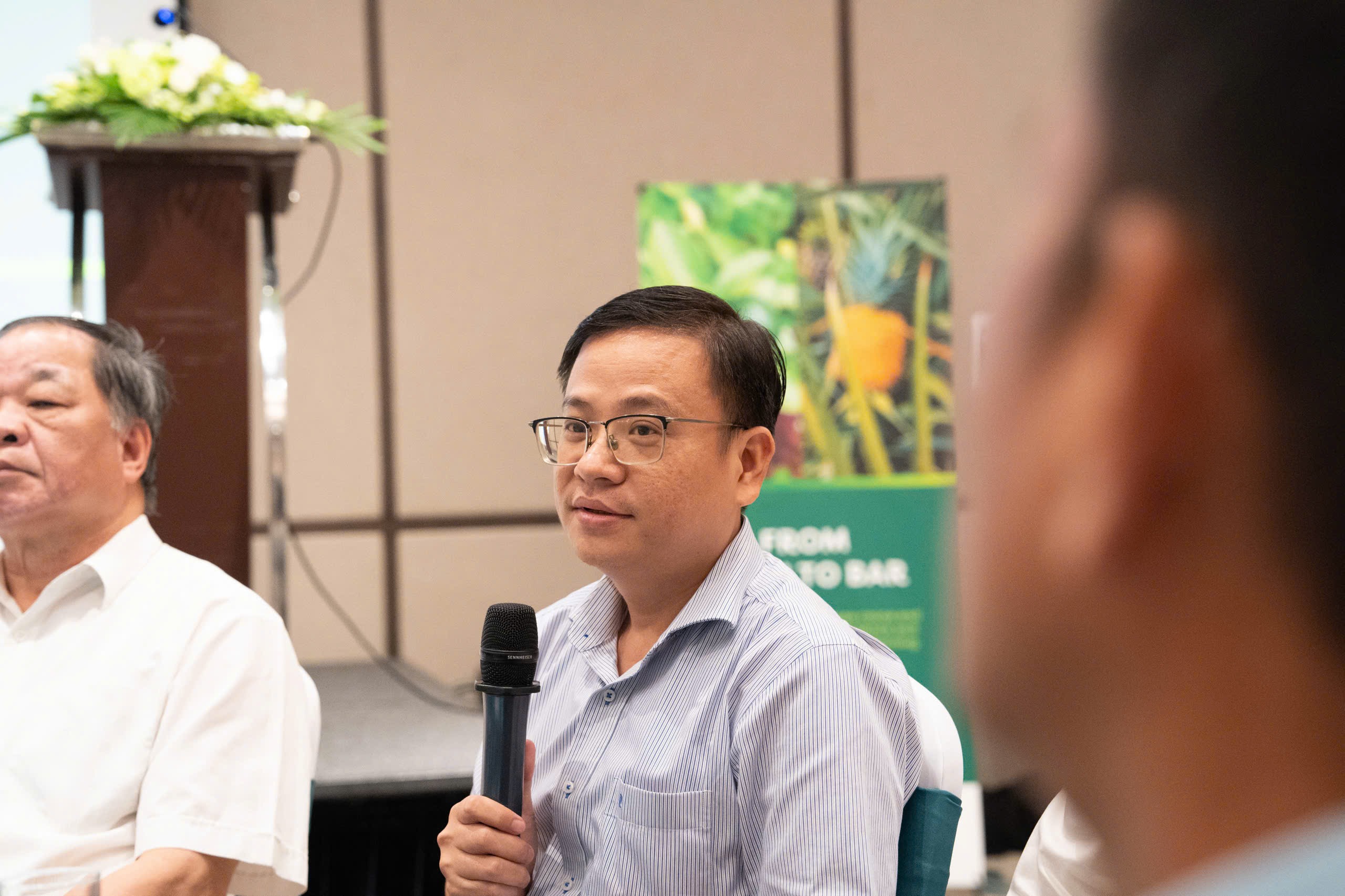
VOAA – Partner Organisation
The Viet Nam Organic Agriculture Association (VOAA), founded on 31 October 2011, is a professional organisation with over 2,000 members, including businesses, cooperatives and dedicated experts. With its mission to pioneer sustainable agriculture, VOAA acts as a strategic bridge between producers, consumers and government agencies to promote green living, health and environmental protection by focusing on policy consultation, organic standards development and farmer training in organic farming techniques. Beyond the domestic market, VOAA also helps Vietnamese organic products reach international markets through trade promotion programs (Biofact) and global networking.
For more details about the project, please visit: From Bean to Bar: Strengthening Vietnamese cocoa and fruit farmers’ climate-resilience and livelihoods through organic farming | Internationale Klimaschutzinitiative (IKI)