The issuance of Decision No. 21/2025/QD-TTg on the National Green Taxonomy in July 2025 marked a significant regulatory milestone in translating Viet Nam’s green growth ambitions into actionable financial practices. The real challenge, however, lies in its implementation across the banking sector.
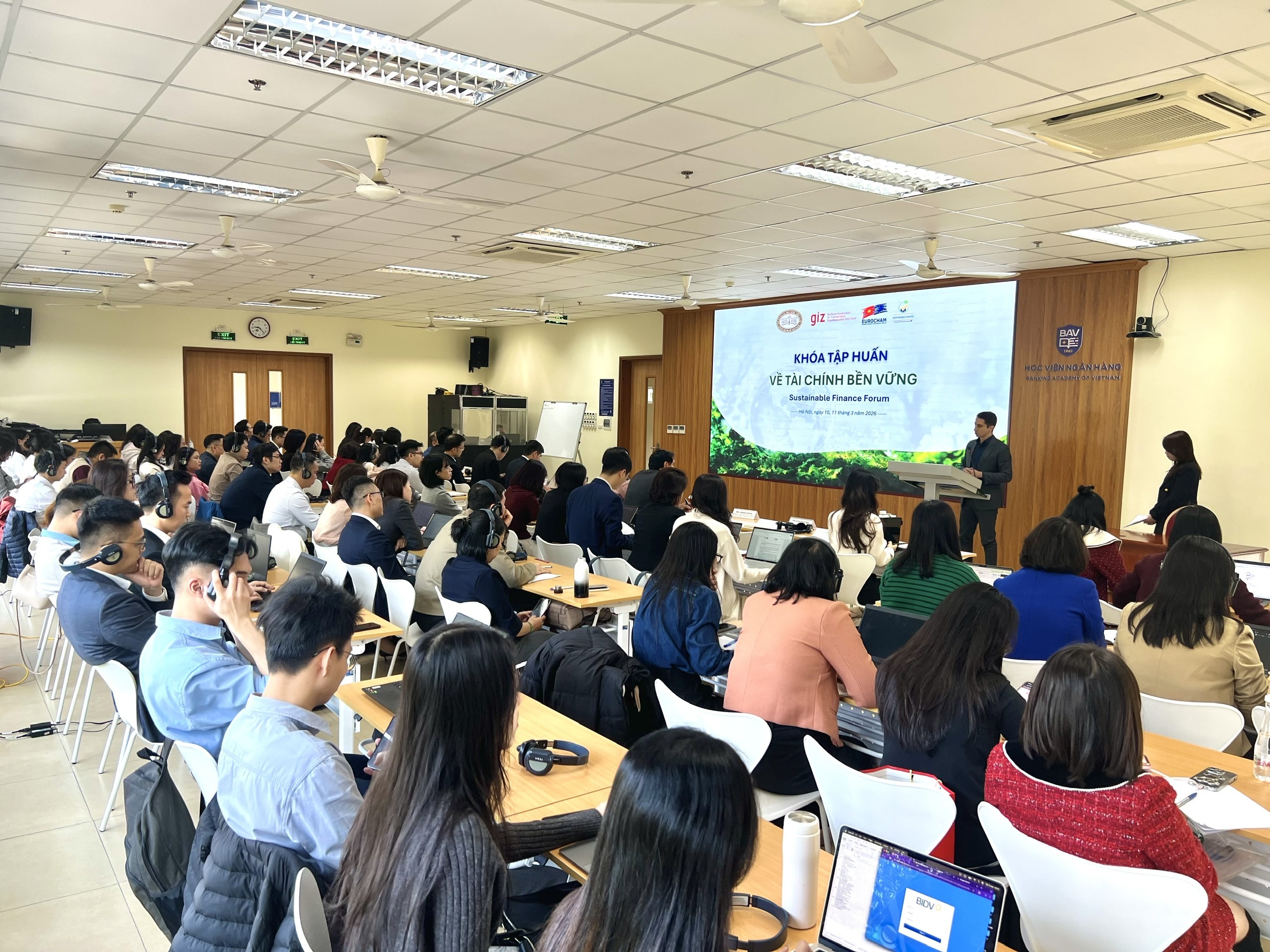
Against this backdrop, the Deutsche Gesellschaft für Internationale Zusammenarbeit (GIZ) GmbH, in partnership with the European Chamber of Commerce in Viet Nam (EuroCham)’s Sustainable Finance Sector Committee (SFSC) and the State Bank of Viet Nam (SBV), convened a two-day forum titled “Building Readiness for Green Taxonomy Implementation and Sustainable Finance in Viet Nam.” Held at the Banking Academy of Viet Nam on March 10–11, the forum served as a timely platform to bridge the policy framework with practical operational guidance.
The event brought together over 50 banking professionals from 18 Vietnamese commercial banks, alongside representatives from key regulatory bodies including SBV, the Ministry of Finance (MOF), and the Ministry of Agriculture and Environment (MAE).
A defining feature of the forum was its ability to connect global experience with Viet Nam’s domestic banking market. International experts joined remotely from major financial centers such as London, Paris, Frankfurt, Singapore, and Hong Kong, offering practical insights into how green finance frameworks have been operationalised in more mature markets. Contributions from leading regulators, including European Central Bank (ECB), the European Securities and Markets Authorities (ESMA), the European Commission (DG FISMA), as well as financial institutions and market actors such as Bankque de France, UNEP FI, BNP Paribas, S&P Flobal, etc. provided participants with concrete examples of taxonomy application, ESG integration, and sustainable credit development.
Rather than remaining theoretical, these discussions emphasised implementation realities, enabling Vietnamese banks to better understand both the opportunities and complexities involved. Participants actively engaged in exploring how international practices could be adapted to local regulatory, market, and institutional conditions.
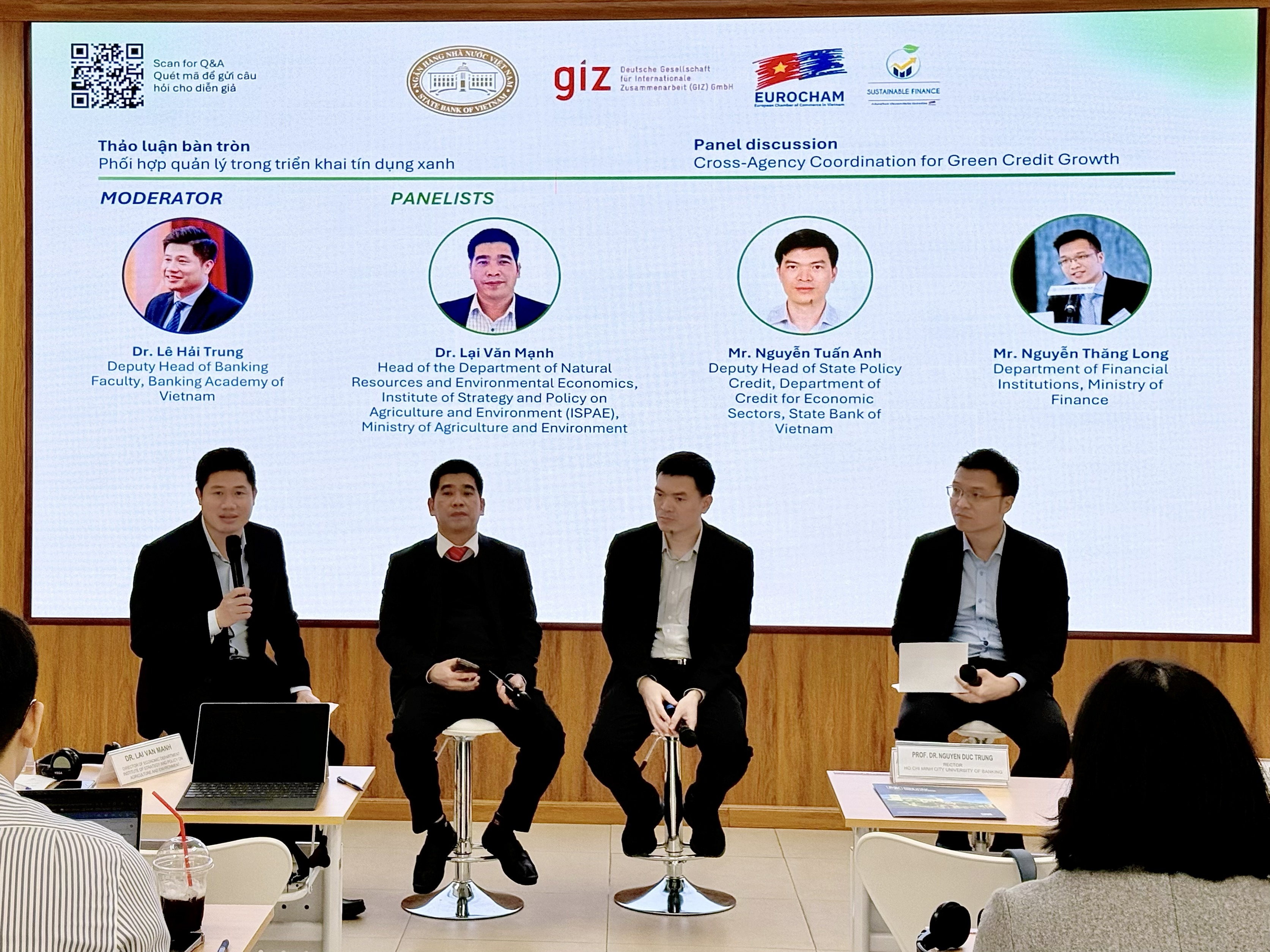
The most critical insights emerged when the discussion turned to Viet Nam’s domestic context. Representatives from SBV, MOF and MAE outlined ongoing efforts to develop detailed guidelines for identifying green, ESG, and circular economy projects, highlighting the importance of inter-agency coordination in operationalising the taxonomy framework. These regulatory efforts are expected to evolve continuously, incorporating feedback from financial institutions and market participants.
Commercial banks, including Agribank, Techcombank, VPBank, and SHB, provided reflections on the challenges they face in applying taxonomy in credit appraisal processes. These challenges can be broadly grouped into three areas.
First, data and classification gaps remain a major constraint. Banks often lack reliable, standardised data, not only at the project level but also across clients’ portfolios, to assess whether activities meet green or ESG criteria, particularly among SME clients. Banks also highlighted the need for a shared, centralised database that can be accessed across the banking system to support more consistent and efficient appraisal of green projects.
Second, institutional and capacity limitations persist. Many banks are still in the early stages of building internal expertise, systems, and processes required to integrate sustainability considerations into lending decisions.
Third, the operational burden associated with compliance is significant. Requirements for documentation, monitoring, and post-disbursement reporting increase both costs and processing time, potentially reducing the attractiveness of green credit products.
These challenges highlight that green taxonomy implementation in Viet Nam has the potential to lead a fundamental operational transformation for the banking sector, going far beyond a mere regulatory exercise.
A key recommendation emerging consistently from bank representatives was the need for an independent third-party verification mechanism, accompanied by a list of accredited verification bodies published by the competent authority (e.g. MAE). Such a mechanism could assess the eligibility of green, ESG, and circular economy projects, thereby reducing the appraisal workload for banks and shortening processing timelines. At the same time, it would enhance credibility and standardisation, helping ensure that green credit remains attractive not only in terms of interest rates but also in efficiency and accessibility.
The forum also underscored the importance of continued collaboration among stakeholders. The partnership between GIZ, EuroCham SFSC, SBV, and the Banking Academy of Viet Nam was instrumental in delivering a platform that combined technical depth with practical relevance.
Beyond knowledge sharing, the forum marked a shift in focus from awareness to execution. While Viet Nam has made significant progress in establishing a regulatory foundation for green finance, the next phase will require translating national policy ambition into market action and bankable projects.
In this context, two priorities stand out: strengthening institutional capacity within banks and refining technical guidelines at the sector level to support more consistent and practical implementation.
The forum concluded with a strong sense of momentum. It reinforced a clear commitment across stakeholders to move forward collectively. Bridging the gap between policy and practice will be critical in building a financial system that is not only resilient and efficient but also aligned with Viet Nam’s long-term sustainability goals.