Decree No. 180/2026/NĐ-CP, signed on 21 May 2026 and taking effect on 15 July 2026, is Viet Nam’s first dedicated legal instrument regulating forest carbon sequestration and storage as a tradeable environmental service. Together with Decree 29/2026 on the domestic carbon exchange and Decree 112/2026 on international transfers of greenhouse gas mitigation outcomes, it completes a three-pillar regulatory framework that the country’s forest carbon market has long been waiting for.
Who owns the emission reductions and who can sell them
Ownership of forest emission reductions (ER) and carbon credits follows the following principle: whoever builds and implements the project represents ownership of the resulting credits. For state-owned forests, this means the Ministry of Agriculture and Environment (MAE) holds that representative role for inter-provincial projects and national parks under its management, while provincial People’s Committees take on that role for projects within a single province. Individual forest owners, management boards, enterprises or communities can represent themselves if they develop the project directly. Critically, private companies and cooperatives cannot register as owners of ER from state-owned forests on their own; they must either enter a cooperation agreement with the forest owner or obtain formal written authorisation before developing any project document. Without this, any Emissions Reduction Purchase Agreement (ERPA) they sign carries no legal validity.
Service providers and users
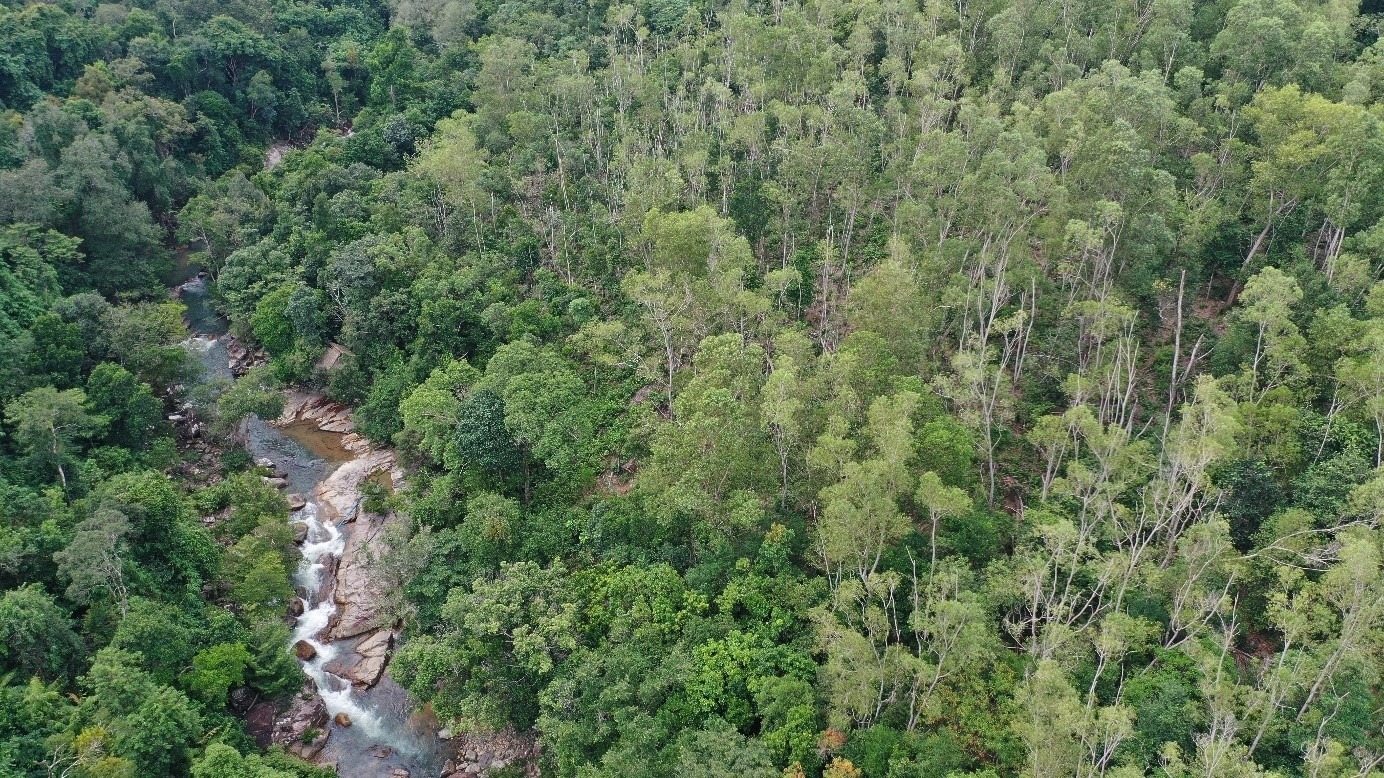
On the supply side, the decree recognises seven categories of forest owners under the 2017 Forestry Law as eligible service providers, ranging from state management boards and military units to household farmers, community groups and foreign-invested enterprises (the latter limited to planted production forests on leased land). Provincial commune-level authorities managing unallocated forest areas are also included.
On the demand side, the decree is notably open: domestic emitters with allocated quotas, voluntary domestic buyers, foreign organisations with legal presence in Viet Nam, international organisations established under international law and foreign individuals are all eligible to purchase credits.
Payment forms and pricing
Payments can be made directly through bilateral contracts or, from 1 January 2029, through the official carbon exchange or indirectly through the Vietnam Forest Protection and Development Fund (VFPDF), which then channels funds down to provincial funds and ultimately to forest owners and communities. Prices are denominated in Vietnamese Dong, with international transactions permitted in foreign currency under applicable foreign exchange rules. There is no fixed price floor; pricing is determined by contract or market mechanisms.
NDC alignment: the non-negotiable core
The most consequential provisions of the decree concern Viet Nam’s Nationally Determined Contribution (NDC). The decree establishes an unambiguous sequencing rule: NDC contribution first, commercial sale second. Before any forest carbon credits can be traded or transferred domestically or internationally, the project must set aside its allocated share of the national NDC target. Only the surplus beyond that retained amount may be sold.
NDC targets are allocated in a cascade: the MAE distributes provincial targets based on forest area, forest type and natural forest variation coefficients; provinces then allocate downward to individual forest owners using the same formula. Layered on top of this, Decree 112/2026 caps international transfers at 50% of the forestry sector’s total ER, ensuring that at least half of verified emission reductions remain available for domestic NDC accounting. Together, these provisions embed climate integrity directly into the transaction structure, rather than treating it as an afterthought.
Implications
Decree 180 creates, for the first time, a legal architecture for forest carbon in Viet Nam, covering project rights, MRV processes, payment mechanisms and NDC safeguards in a single instrument. This significantly reduces legal risk for investors and forest owners alike and clears the path for large-scale transactions. However, key implementation gaps remain: the domestic forest carbon standard, detailed MRV guidelines and pricing methodology are still forthcoming.