Following a comprehensive review of national environmental protection and climate change response targets, Viet Nam has identified key implementation measures and monitoring indicators to accelerate progress. The mandate was formally established in Conclusion No. 75-KL/TW, which was signed by General Secretary To Lam on July 28, 2026, following the Third Plenum of the 14th Central Committee of the Communist Party of Viet Nam. Broadly reviewing 13 years of progress under Resolution No. 24-NQ/TW (issued June 3, 2013), the conclusion reaffirms the resolution’s strategic direction while setting targets for the years ahead. Various changes to key monitoring indicators in the environment and climate areas have been set in the conclusion.
Why it Matters?
As the latest high-level policy guidance from the Party Central Committee, Conclusion 75 reflects Viet Nam’s political commitment to environmental protection and climate resilience. It also provides an important foundation for further strengthening the country’s legal and policy framework for sustainable development.

Setting the Goals
Conclusion 75 places environmental protection and climate action at the heart of development planning, recognising them as both prerequisites for and drivers of the green transition and sustainable economic growth. To achieve these objectives, science, technology, innovation, digital transformation and the development of a highly skilled workforce are recognised as critical enablers and primary drivers.
The objectives for 2030, with a vision towards 2045, focus on:
- Strengthening environmental governance, climate change response and disaster risk management to minimise losses.
- Prioritising the remediation of severely polluted areas, halting biodiversity loss and strengthening the control of major pollution sources.
Accelerating the transition towards a green, circular and low-carbon economy, contributing to the achievement of the net-zero emissions target by 2050.
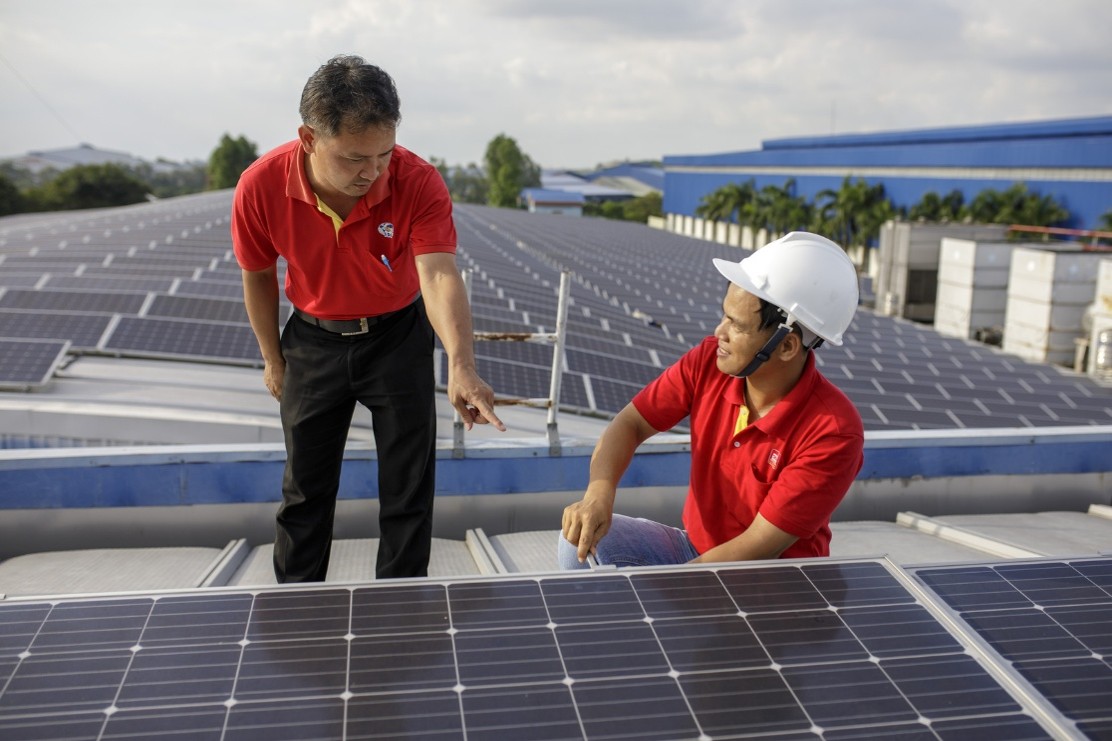
To achieve these objectives, several key measures have been identified.
- Strengthen institutional and legal frameworks, implementation and supervision.
- Mobilise, allocate and utilise domestic and international resources for environmental protection and climate change response, including minimum 2% of total annual state budget expenditure to environmental protection
- Improve environmental quality with a focus on pressing environmental issues and prevention and control of pollution
- Strengthen nature conservation, ecosystem restoration, biodiversity, resource management
- Leverage climate change adaptation and disaster risk reduction
- Accelerate the green transition, circular and low-carbon economies; and strengthen the management of greenhouse gas emissions.
…And the Benchmarks
Following the key measures are 18 monitoring indicators to track national implementation through the end of 2030. Most of these indicators are already included in existing policy documents, with their targets revised under Conclusion 75.
The target of increasing the share of renewable energy in total primary energy supply to 26.1% represents a more ambitious level than the 15–20% target set out in Resolution No. 55-NQ/TW (2020). A direct comparison with the JETP target of 47% total installed electricity capacity would require knowing the assumed energy mix, but the trajectory could be consistent.
Viet Nam aims for the green economy to account for around 10% of GDP by 2030 and for 100% of major wastewater and emission sources to be equipped with automatic, continuous monitoring systems. These two indicators are quantified for the first time.
Higher targets have been set in several other areas.
Viet Nam will allocate at least 2% of annual state budget expenditure to environmental protection, doubling the level seen in recent years. The funding is intended, among other purposes, to encourage greater private-sector participation in the green and circular economy.
Air quality in Hanoi and Ho Chi Minh City remains a particular focus. The target for days with good or moderate air quality to account for 80% of the year, compared with the previous target of 75–80% under the National Environmental Protection Strategy to 2030.
The target for the proportion of domestic wastewater collected and treated in special-class and Class I cities has been raised to 70%, from 50% under Resolution 247/2025/QH15, while the geographical scope of application has been narrowed.
The target for relocating households living in areas at high risk of flooding and landslides to safe locations has also been raised to 80%, compared to 70% under the National Strategy on Climate Change to 2050.
From policy to implementation
Following Conclusion 75, the government issued Resolution 208/NQ-CP to assign specific tasks to ministries and provinces. The assigned organisations will need to publish their implementation plans to realise the policy direction and indicators set out by the party and the government. So far, the Ministry of Agriculture and Environment (MAE) is the first one to publish its action agenda in Decision 3088/QĐ-BNNMT dated 05 August 2026.
In the government resolution, it was also identified that the 2% state budget for environmental protection and climate change response will be financed through a preferential financial mechanism developed by the State Bank of Viet Nam. Specifically, this mechanism provides an interest rate subsidy of 2% per annum (sourced from the state budget) for private sector enterprises, business households, and individual business owners borrowing from commercial banks to implement green and circular projects and adopt environmental, social, and governance (ESG) frameworks.
Full version (in Vietnamese) of the conclusion can be found here: Conclusion 75