Cuc Phuong National Park, Viet Nam – 22 May 2025
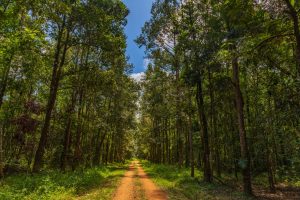
More than 100 government officials, international partners, conservationists and local community members gathered at Cuc Phuong National Park to celebrate the International Day for Biological Diversity 2025. The event, themed Living in Harmony with Nature and Sustainable Development, was organised by the Ministry of Agriculture and Environment (MAE) in collaboration with the People’s Committee of Ninh Binh Province, the United Nations Development Programme (UNDP), and the Support to Viet Nam for the Implementation of the Paris Agreement II (VN-SIPA II) project, commissioned by the German Federal Ministry for Economic Affairs and Climate Action (BMWK) through the International Climate Initiative (IKI).
Hosted at Viet Nam’s oldest national park, the celebration aimed to raise public awareness and rally stakeholder commitment to accelerate the implementation of the Kunming-Montreal Global Biodiversity Framework (GBF) and the National Biodiversity Strategy to 2030, Vision to 2050 (NBS).
Senior representatives, including Vice Minister Nguyen Quoc Tri (MAE), Vice Chairman Nguyen Cao Son (Ninh Binh Provincial People’s Committee) and UNDP Deputy Resident Representative Patrick Haverman, delivered keynote speeches, calling for a unified, whole-of-society approach to biodiversity conservation, particularly in the face of intensifying environmental pressures.

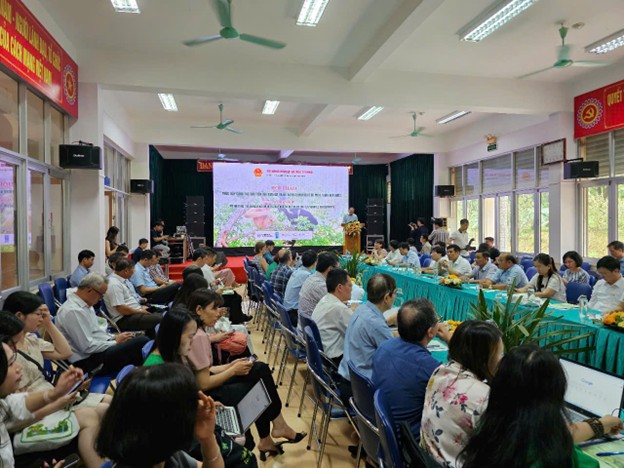
Following the opening ceremony, a technical workshop entitled “Promoting Nature Conservation and Biodiversity for Sustainable Development” was held. The session was chaired by Mr. Nguyen Van Tai, Director General of the Nature and Biodiversity Conservation Agency (NBCA), alongside Deputy Directors Ms. Hoang Thi Thanh Nhan and Mr. Le Van Huu. It provided updates on progress under the GBF and NBS and facilitated knowledge sharing among experts and participants.
During the workshop, NBCA presented the key outcomes of COP16, including: (i) the finalisation of the monitoring framework, (ii) the Planning, Monitoring, Reporting and Review (PMRR) mechanism, resource mobilisation and financial mechanisms, (iii) the Digital Sequence Information (DSI) system and (iv) the Cali Fund, enhanced engagement of Indigenous Peoples and Local Communities (IPLCs), and mainstreaming biodiversity across sectors. The presentation also reviewed Viet Nam’s recent achievements in biodiversity policy development, as well as the establishment, expansion and strengthening of protected areas. Looking forward, NBCA outlined strategic conservation directions, including:
- Expanding and enhancing the management of special-use forests, marine protected areas and biodiversity corridors, guided by the national biodiversity master plan
- Strengthening areas of national and international ecological significance
- Institutionalising and scaling up Other Effective area-based Conservation Measures (OECMs)
- Restoring degraded ecosystems and conserving endangered and migratory species, particularly those classified as rare or precious
- Conserving genetic resources and ensuring fair and equitable benefit-sharing, while protecting traditional knowledge
- Updating national endangered, precious and rare species lists, improving rescue and conservation facilities and reinforcing the national rescue centre network
- Valuing biodiversity’s role in sustainable development, climate adaptation and disaster risk reduction
- Controlling harmful human activities that adversely affect biodiversity
In a joint presentation, GIZ, UNDP, WWF and IUCN outlined their support to Viet Nam in achieving the GBF goals. This includes technical cooperation to re-align national biodiversity targets with GBF priorities, adjust national indicators and monitoring frameworks and prepare the 7th and 8th National Reports. Development partners also highlighted initiatives to institutionalise OECMs and strengthen resource mobilisation for biodiversity financing.
Case studies from Cuc Phương and Tram Chim National Parks provided first-hand perspectives on the challenges and successes of biodiversity management in Viet Nam. Despite ongoing limitations in funding, staffing and equipment, both parks continue to demonstrate a strong commitment to conservation, with speakers emphasising the need to resolve policy overlaps, build technical capacity and embed local and scientific knowledge into national planning.
In his closing statement, Director General Nguyen Van Tai stressed that public expectations for biodiversity action are at an all-time high. “What we need now is a holistic approach that engages all sectors of society,” he stated. “This includes improving policy coherence, integrating field data into decision-making, and developing a comprehensive, real-time national biodiversity database to underpin every aspect of biodiversity governance.”
For more information about the project, please visit: Support to Viet Nam for the Implementation of the Paris Agreement II | Internationale Klimaschutzinitiative (IKI)